


GST Compliance & Updates
GST TDS Applicable: Rate, Rules & TDS on GST (2026)GST TDS Applicable: Rate, Rules & TDS on GST (2026)
Written by Hatim Dudhiyawala

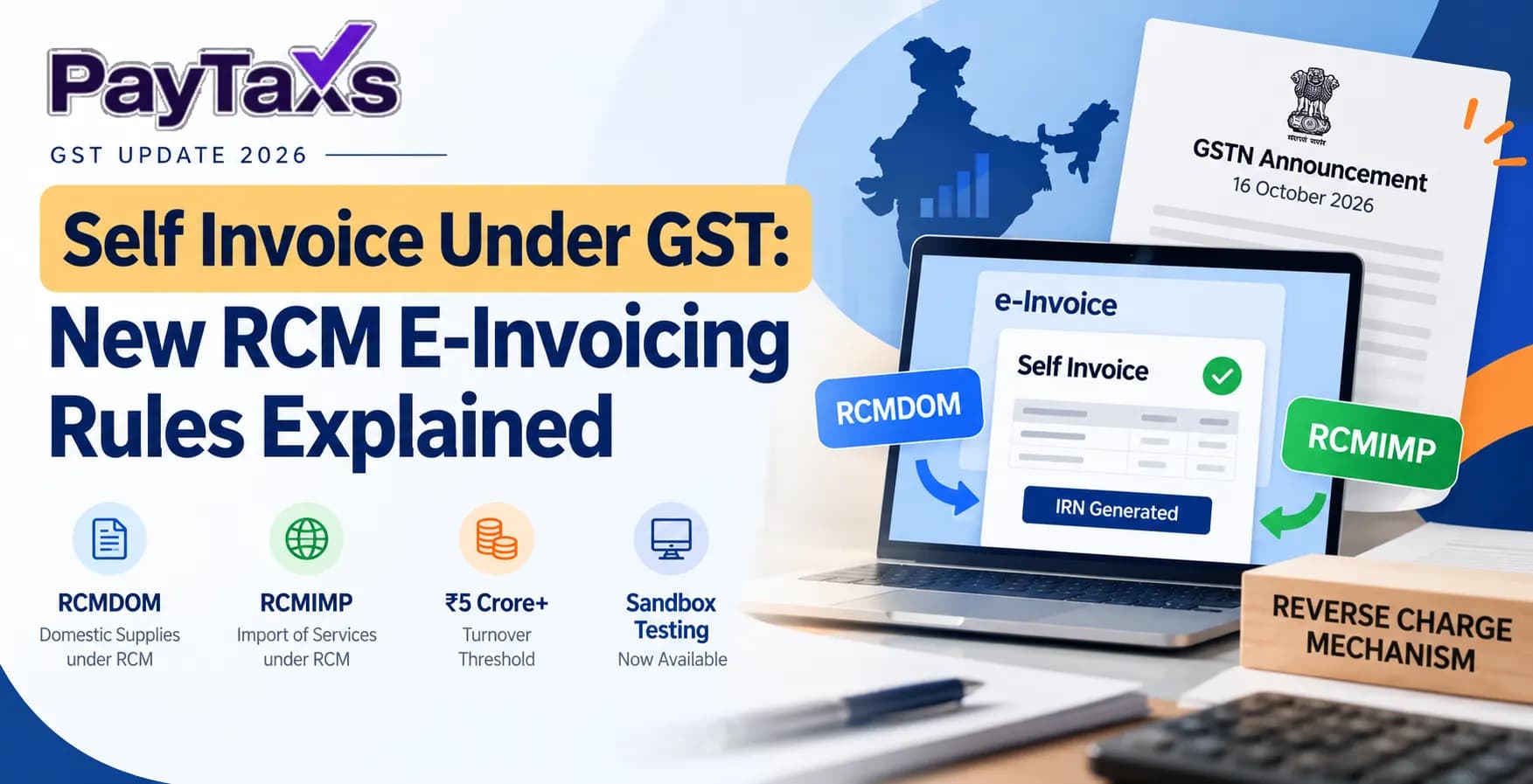
The Goods and Services Tax Network (GSTN) has announced a new e-invoicing facility for self-invoices raised under the Reverse Charge Mechanism (RCM). The announcement, dated 16 October 2026, introduces two new supply types: RCMDOM and RCMIMP.
The facility is intended for registered taxpayers with an aggregate annual turnover (AATO) of ₹5 crore or more. However, businesses should not rush to change their live filing process yet. GSTN says the new functionality is currently available in the sandbox, which is a test environment, and the production rollout date will be announced later.
In this guide, we explain what the announcement means, who may be affected, how the new codes work, and what businesses should do now.
Self-invoicing under GST refers to a situation in which a registered recipient issues an invoice for a qualifying purchase from an unregistered supplier when the applicable GST provisions require the recipient to issue one. Under the Reverse Charge Mechanism, the recipient pays the applicable GST instead of the supplier paying it in the usual way. However, self-invoicing does not apply automatically to every purchase from an unregistered person.
The key things businesses should understand are:
For example, an Indian business may receive a service from an unregistered domestic supplier. If the service falls within a notified RCM category and the law requires the recipient to issue an invoice, the business must follow the relevant invoicing requirements.
GSTN's announcement follows the recommendation made at the 57th GST Council meeting on 8 October 2026. The Council recommended extending e-invoicing to specified domestic supplies received from unregistered persons under RCM and to imports of services for taxpayers with aggregate annual turnover of ₹5 crore and above.
The main points of the announcement are:
It is important to distinguish the GST Council's recommendation from the operative legal requirements. Businesses should verify the applicable notifications, amendments and official implementation instructions before changing their live reporting processes.
For the wider policy background, read 57th GST Council meeting recommendations.
The proposed extension is relevant to registered taxpayers with aggregate annual turnover of ₹5 crore or more who undertake the specified RCM transactions.
Businesses can begin by checking the following areas:
Meeting the turnover threshold alone does not mean that every purchase must be self-invoiced under RCM. Consider the nature of the transaction and the applicable legal requirements.
The announcement describes the intended reporting process for eligible, active registered recipients.
An IRN is a unique reference created for successfully reported invoices. Follow the specified technical requirements and validation rules. The new e-invoicing facility under the reverse charge mechanism enables recipient-generated self-invoices to be reported through the existing framework.
RCMDOM and RCMIMP separate domestic RCM transactions from qualifying service imports for business review.
RCMDOM relates to specified domestic supplies received from unregistered suppliers where the registered recipient is liable to pay GST under RCM. Businesses should review the following before classifying a transaction:
For example, an Indian company may receive a service from an unregistered supplier in India. If the service is covered by the applicable RCM provisions and self-invoicing is required, the transaction may fall within the domestic category.
Remember: Not every domestic purchase from an unregistered supplier automatically falls under RCM.
RCMIMP relates to self-invoices for qualifying imports of services from suppliers outside India where the recipient is liable to pay GST under RCM.
Businesses should pay attention to these points:
An Indian business must determine if consulting services from a foreign supplier qualify as an import and if RCM applies, affecting its GST treatment.
The announcement contains several important figures. Here is what they mean for businesses.
|
Figure |
Why it matters |
|
16 October 2026 |
Date of the GSTN announcement. |
|
8 October 2026 |
Date of the 57th GST Council meeting that recommended the extension. |
|
₹5 crore or more |
Intended aggregate annual turnover threshold, subject to applicable law and notifications. |
|
2 new supply types |
RCMDOM and RCMIMP are being added to the e-invoice framework. |
|
6 authorised IRPs |
Sandbox testing is available across all six authorised Invoice Registration Portals. |
|
No production date announced |
The notice says the live rollout and start of reporting requirements will be communicated later. |
There is also a wider picture to consider. According to the Press Information Bureau's October 2026 GST reform material, India's GST system had approximately 1.70 crore registered taxpayers as of September 2026. By 30 September 2026, it had cumulatively processed 3,053 crore invoice uploads and 833.82 crore e-way bills.
These figures show the scale of India's digital GST system. They are national system statistics, not a count of businesses affected by the new RCM self-invoicing facility.
The extension connects RCM self-invoices to e-invoicing, involving GST invoice distinction, data submission, validation, and receiving an IRN. Businesses should understand the following:
The new facility does not represent a broad change to all RCM transactions or invoices. Its scope is limited to specific transactions defined by the applicable requirements.
The 16 October announcement does not establish a live production start date. Before making changes to live operations, businesses should check the following:
A Council recommendation, a sandbox feature and an operative production requirement are different things. Businesses should monitor the official e-Invoice portal and the relevant government notifications for the operative requirements.
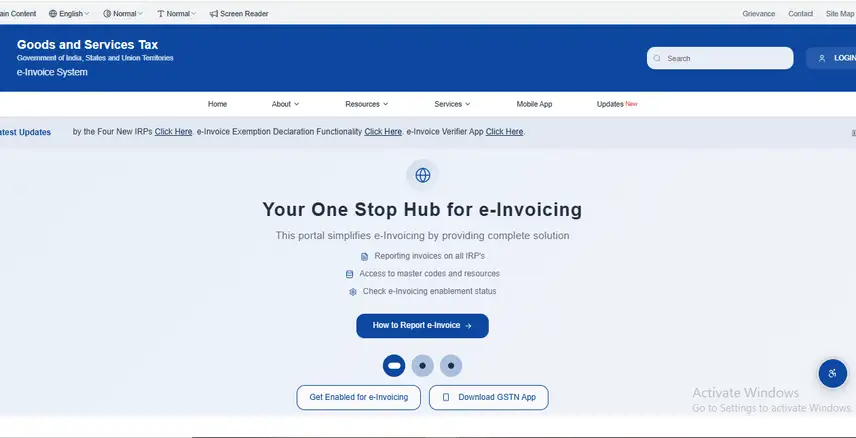
GSTN announced that the new functionality was available in the sandbox environments of six authorized Invoice Registration Portals. These environments support testing and integration ahead of the production rollout.
The six IRPs identified in the announcement are:
Businesses and technology providers should take the following steps:
The NIC e-Invoice API sandbox is a useful starting point for developers and integration teams. Sandbox testing should not be confused with live invoice reporting.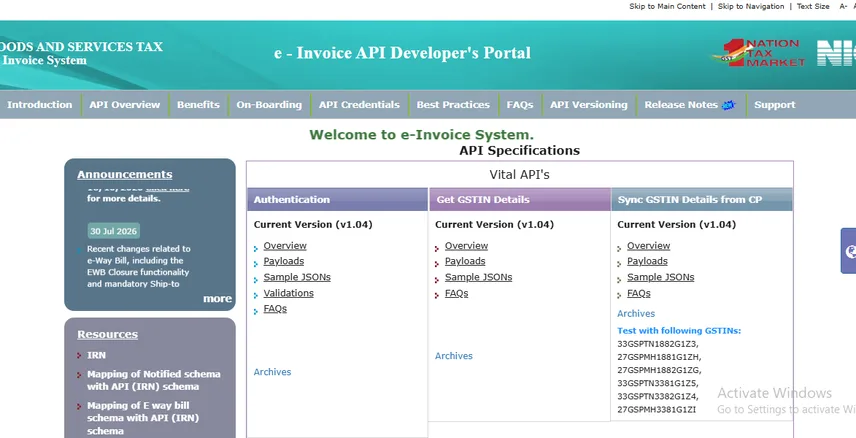
Businesses that may be affected should begin preparing their processes rather than making assumptions about the implementation date. Early preparation can help identify gaps in transaction classification, accounting systems and invoice data.
The following steps can help businesses get ready:
These steps can help reduce last-minute integration issues while keeping the business aligned with the actual implementation timeline. But if you still need help understanding your GST compliance requirements, visit Paytaxs GST services.
The 16 October 2026 GSTN announcement marks a key step in e-invoicing for specified recipient-generated self-invoices under RCM, introducing two new supply types, RCMDOM and RCMIMP, for registered taxpayers with an annual turnover of ₹5 crore or more. Currently, the facility is only available for sandbox testing, and the production rollout date is still pending. Businesses should review their RCM transactions, consult with software providers, and stay updated on official notifications for implementation details.
Note: This article is based on the GSTN announcement from October 16, 2026. It is for informational purposes only and not a substitute for professional GST advice.
Note: This guide is for information purposes only. The views expressed in this guide are personal and do not constitute the views of Paytaxs. Paytaxs or the author will not be responsible for any direct or indirect loss incurred by the reader for taking any decision based on the information or the contents. It is advisable to consult either a CA, CS, CPA or a professional tax expert from the Paytaxs team, as they are familiar with the current regulations and help you make accurate decisions and maintain accuracy throughout the whole process.
Hatim Dudhiyawala is a Certified Public Accountant (CPA) with SaveTaxs and specializes in Indian and NRI taxation. He advises individuals, NRIs, and businesses on income tax filing, capital gains taxation, DTAA benefits, fund repatriation, and tax compliance. With experience in cross-border tax matters, Hatim helps taxpayers understand complex regulations and make informed decisions. Through his articles, he shares practical insights to help readers stay compliant and manage their tax obligations with confidence. See Full Bio
Want to read more? Explore Blogs