


GST Return Filing
Why Is a GSTR-3B Filing Error Occurring Even When There Is No Tax Liability?Why Is a GSTR-3B Filing Error Occurring Even When There Is No Tax Liability?
Written by Hatim Dudhiyawala

GST has been part of India's tax system since 1 July 2017. But does every freelancer need to register? Not necessarily. For many service providers, the general GST registration threshold is ₹20 lakh in aggregate annual turnover, while the applicable threshold can be lower in certain states. And although 18% is a common GST rate for professional services, the correct rate depends on the service being supplied. If you are a freelance writer, graphic designer, software developer, consultant, digital marketer, or content creator, understanding these numbers can help you avoid registration mistakes, incorrect invoices, and missed filing obligations.
The rules can become more complicated when you work with multiple Indian clients or receive payments from overseas. Your aggregate turnover, the nature of your services, and the applicable GST provisions all matter.
In this guide, we'll explain GST for freelancers in India, including registration requirements, applicable rates, exports of services, invoices, and GST return filing, with practical examples to help you understand your responsibilities.
These figures are starting points, not substitutes for checking the rules that apply to your specific service and location.
Goods and Services Tax (GST) is an indirect tax on eligible supplies of goods and services. India implemented GST on 1 July 2017, replacing several central and state indirect taxes with a unified framework.
For freelancers, GST may apply to taxable services supplied to businesses or individuals, depending on registration requirements, exemptions, and the specific transaction.
For example:
These activities may constitute supplies of services under GST. However, the applicable tax treatment depends on the actual service and the relevant legal provisions.
GST is commonly divided into three components: CGST, SGST, and IGST.
|
Tax component |
When it generally applies |
|
CGST |
Combined with SGST on eligible intra-state supplies |
|
SGST |
Combined with CGST on eligible intra-state supplies |
|
IGST |
Generally applies to eligible inter-state supplies and may apply to exports when tax is payable |
For example, if a registered freelancer provides a taxable service to a client in the same state, CGST and SGST may apply. If the transaction qualifies as an inter-state supply, IGST may apply instead.
The supplier's location, the place of supply, and the nature of the transaction determine the appropriate treatment.
GST and income tax are two separate tax obligations.
GST concerns taxable supplies of goods and services, while income tax concerns taxable income under the applicable income-tax legislation. A freelancer may need to file an income-tax return even if GST registration is not required. Similarly, obtaining a GST registration does not replace income-tax compliance.
Understanding the distinction helps freelancers maintain the correct records and avoid confusing GST payments with income tax liabilities.
One of the most common questions about GST registration for freelancers is whether earning freelance income automatically requires a GST number. The answer is no. Registration depends on aggregate turnover and the applicable legal provisions.
For many service providers, the aggregate turnover threshold is ₹20 lakh in a financial year, with lower thresholds in some states. This is calculated across India for supplies connected to the same PAN and includes taxable and exempt supplies, exports, and inter-state supplies, while excluding certain inward supplies taxed under reverse charge. Therefore, the threshold is not based on income from a single client or type of service.
Example: Suppose a freelancer earns the following amounts in one financial year:
|
Income source |
Annual amount |
|
Content writing |
₹9,00,000 |
|
Website development |
₹6,00,000 |
|
Digital marketing |
₹7,00,000 |
|
Total |
₹22,00,000 |
The freelancer's combined turnover is ₹22 lakh. If these amounts count towards aggregate turnover, the general ₹20 lakh threshold has been crossed. The freelancer must assess the applicable registration requirement, including the state threshold, any exemption, and other relevant provisions.
Yes, freelancers who qualify for the applicable threshold exemption and are not otherwise required to register can generally provide services without GST registration. However, staying below ₹20 lakh does not automatically settle every case. Special provisions, the nature of the supply, and applicable notifications must also be considered.
If your turnover is approaching the threshold, review your registration position before accepting more work or issuing invoices.
Review your GST position if:
If you're unsure about your registration obligations, visit Paytaxs to explore GST compliance support.
There is no single GST rate for every freelancer. The applicable rate depends on the classification of the service and the relevant GST rate notification.
India's GST framework includes principal rate slabs such as 5%, 12%, 18%, and 28%, alongside exempt and specially treated supplies. These are broad rate categories, not a menu from which freelancers can select their tax rate.
Many professional and business services attract 18% GST, but the correct classification must be checked before invoicing.
Consider a registered freelancer providing a service that is confirmed to attract GST at 18%.
|
Invoice calculation |
Amount |
|
Professional fee |
₹50,000 |
|
GST at 18% |
₹9,000 |
|
Total invoice value |
₹59,000 |
The 18% rate in this example is an assumption for illustration. The actual rate must be verified for the specific service.
The ₹9,000 collected as GST is not simply additional freelance income. The freelancer must account for the tax and pay the applicable liability according to the GST rules, after considering eligible input tax credit.
The treatment for freelancers depends on their registration status, the taxability of the supply, any exemptions, and special treatment qualifications. Unregistered freelancers shouldn't collect GST as if they're registered, while registered freelancers need to issue invoices correctly and shouldn’t apply the same tax treatment to all transactions.
Freelancers working with clients in the US, UK, Australia, Canada, or other countries should understand export-of-services rules. Not all payments from overseas clients count as exports. Under the IGST Act, a service qualifies as an export if:
Additionally, it's essential to review the applicable place-of-supply rules and the contractual arrangement.
Eligible exports of services are treated as zero-rated supplies under GST, meaning freelancers must still comply with GST regulations. Registered exporters can provide qualifying services under a Letter of Undertaking (LUT) without paying IGST, and they may also claim input tax credit or refunds if applicable.
A Letter of Undertaking allows eligible registered exporters to supply qualifying exports without IGST, given they meet certain conditions. Freelancers working with foreign clients should assess if GST registration and an LUT are necessary.
Example: An Indian Freelance Writer Working With a US Client.
An Indian freelance writer creating content for a US business should confirm:
If the service qualifies as an export, it may be zero-rated; otherwise, tax treatment may vary. Keep contracts, invoices, and records organized.
If GST registration is needed, apply on the GST portal. Freelancers don’t need a private limited company for registration.
Depending on your circumstances, you may need:
Check the latest requirements on the official portal before applying.
Once approved, review your GST registration certificate and GSTIN carefully.
Remember: registration is only the first step. You must also understand the invoicing, tax payment, return filing, and recordkeeping obligations that follow.
A GST invoice records the services supplied, the amount charged, and the applicable tax details. Registered freelancers must follow the invoice requirements that apply to their transactions.
A tax invoice generally includes:
The exact requirements depend on the transaction and the applicable invoicing rules.
A registered freelancer providing a domestic service for ₹50,000 will show a GST of 18%, totaling ₹9,000, leading to a total of ₹59,000 on the invoice. For exports, ensure compliance with specific invoice requirements rather than mimicking domestic invoices.
Practical Tip: Use consecutive invoice numbers and reconcile them with payments and GST returns to track transactions and address client inquiries effectively.
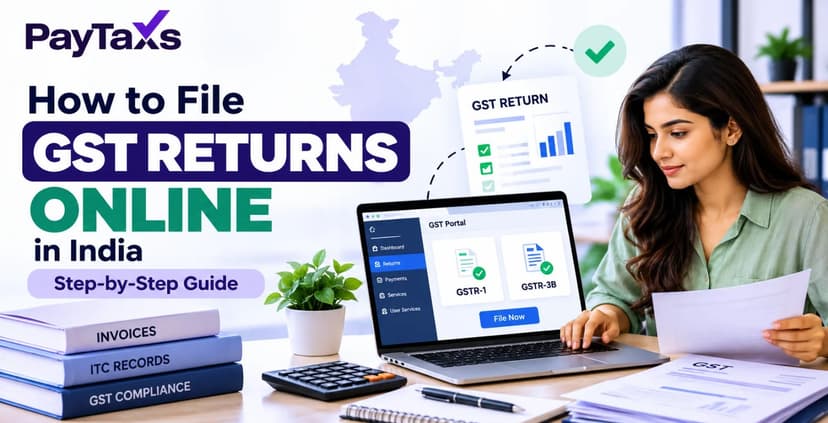
GST return filing is a compliance responsibility for registered freelancers, with requirements varying based on registration type.
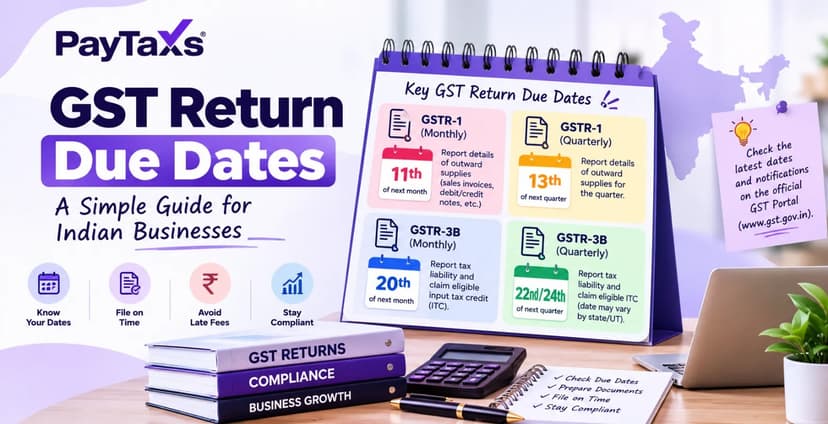
GSTR-1 is used to report outward supplies and invoice details. Monthly filers typically have a due date of the 11th of the following month, while quarterly filers have a deadline of the 13th after the quarter.
GSTR-3B is a summary return to report tax liabilities and claim input tax credit. Deadlines vary based on taxpayer category and filing frequency, so it’s essential to check the GST portal.
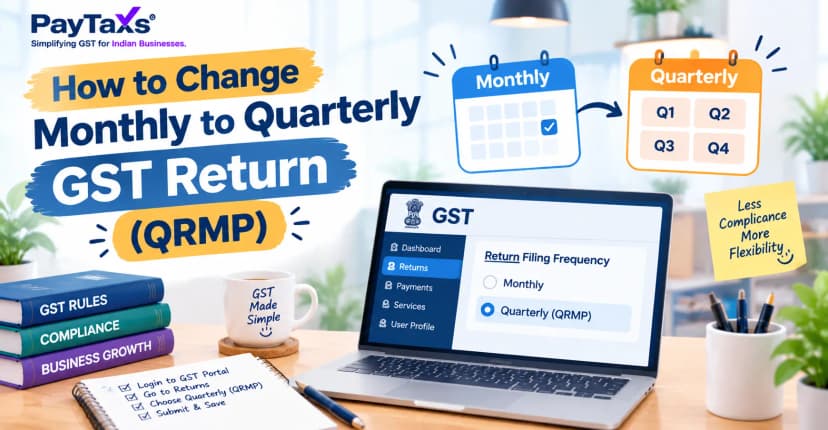
Eligible freelancers may choose the Quarterly Return Monthly Payment (QRMP) scheme, allowing quarterly filings of GSTR-1 and GSTR-3B, with monthly tax payments. Eligibility and deadlines should be verified on the GST portal.
Late filing can result in fees and interest. Freelancers should monitor filing deadlines consistently, even during inactivity, as nil returns may still be necessary.
For more details, refer to the Paytaxs guide on GST return filing for small businesses.
Registered freelancers can claim Input Tax Credit (ITC) on eligible GST paid for business purchases, like software subscriptions and equipment, if they meet certain conditions. Not all expenses qualify, and claims require valid tax documents, payment rules, and adherence to GST law.
For instance, if a freelancer buys a laptop for work, they must verify the actual business use and documentation before claiming the GST.
It's important to keep invoices and check eligible credits before filing returns.
Here are some common mistakes freelancers make when filing GST:
Simplify GST registration, filing, and compliance with Paytaxs.
Freelancers in India need to know about GST registration, service classification, and invoicing rules. Key points include a ₹20 lakh threshold and an 18% rate since 1 July 2017. If serving international clients, pay attention to export conditions. For assistance with GST, visit Paytaxs.
Disclaimer: This article is for general informational purposes and is not a substitute for professional tax advice. GST rates, registration requirements, exemptions, and filing rules may change. Verify the applicable law and notifications before acting.
Note: This guide is for information purposes only. The views expressed in this guide are personal and do not constitute the views of Paytaxs. Paytaxs or the author will not be responsible for any direct or indirect loss incurred by the reader for taking any decision based on the information or the contents. It is advisable to consult either a CA, CS, CPA or a professional tax expert from the Paytaxs team, as they are familiar with the current regulations and help you make accurate decisions and maintain accuracy throughout the whole process.
Shubham Jain is the Founder of SaveTaxs and has extensive experience in Indian and NRI taxation. He advises individuals, NRIs, and businesses on tax filing, tax planning, capital gains, DTAA benefits, fund repatriation, and compliance matters. He regularly writes about taxation and related financial topics. His focus is on making complex tax concepts easy to understand. Through his articles, he helps taxpayers stay informed, avoid common mistakes, and stay compliant with Indian tax laws. See Full Bio
Want to read more? Explore Blogs