


GST Return Filing
Why Is a GSTR-3B Filing Error Occurring Even When There Is No Tax Liability?Why Is a GSTR-3B Filing Error Occurring Even When There Is No Tax Liability?
Written by Hatim Dudhiyawala

Missing a GST deadline can mean late fees, interest where applicable, and unnecessary stress for your business. The tricky part? Not every GST-registered business follows the same filing schedule. The GST return filing due date depends on the return you need to submit, whether you file monthly or quarterly, and any government notification extending the deadline.
In this guide, we'll explain the due dates for GSTR-1 and GSTR-3B, how monthly and quarterly filing differ, and how to keep your business on track.
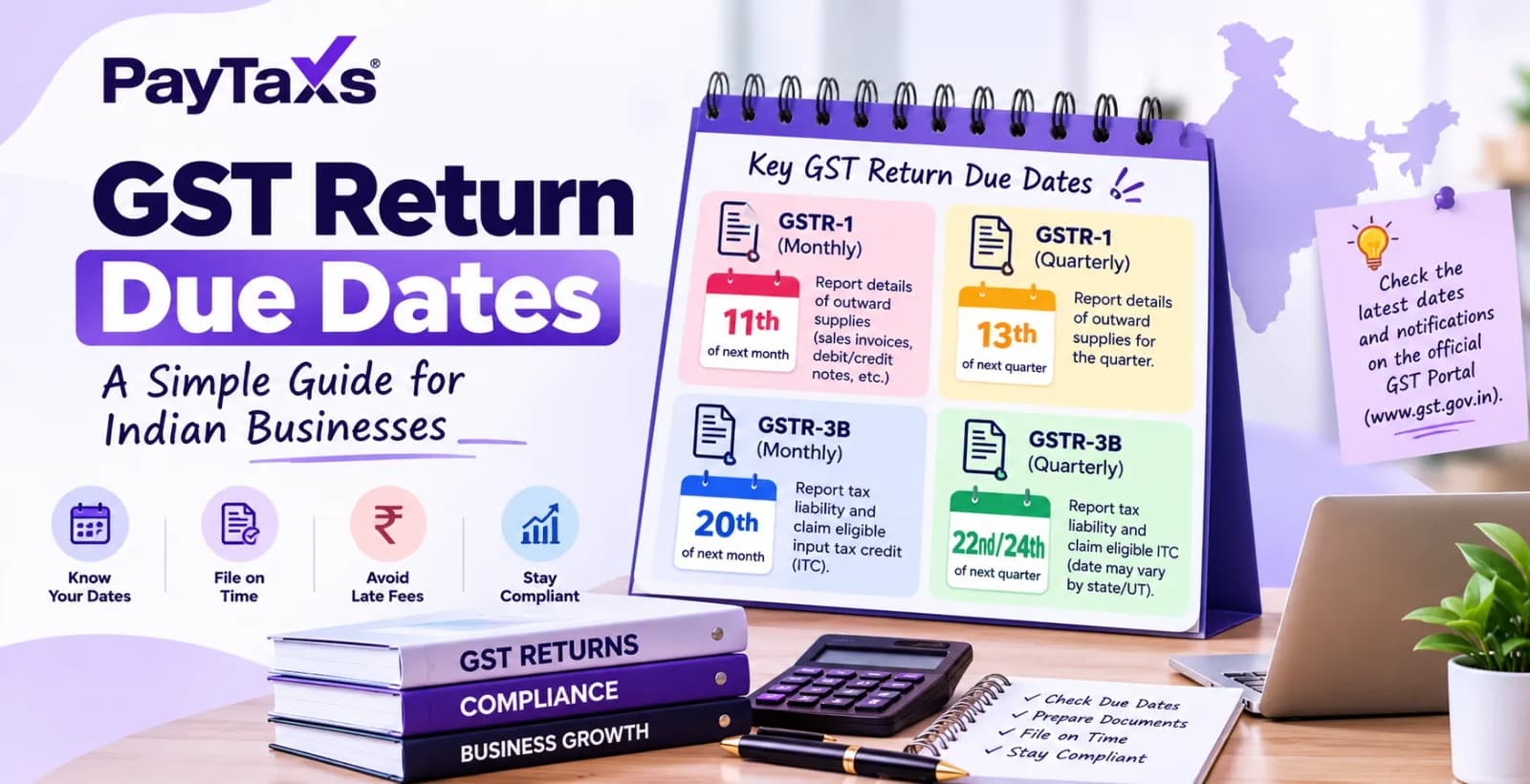
For many regular taxpayers, the usual deadlines are:
These are the standard timelines, not universal deadlines for every taxpayer. Special categories, applicable rules and government extensions can change the date. Always verify the relevant tax period on the official GST Portal.
If you need help understanding your filing obligations, explore our GST Return Filing Services to learn how Paytaxs can support your compliance needs.
GSTR-1 is the statement used by applicable registered taxpayers to report details of outward supplies, including relevant sales invoices, credit notes and debit notes.
Your filing frequency determines the usual deadline:
For example, a monthly GSTR-1 for October would generally be due on 11 November. A quarterly GSTR-1 for the October–December quarter would generally be due on 13 January.
These examples illustrate the usual schedule; check for any applicable extension before filing.
You can review the official GSTR-1 filing guidance for eligibility, filing steps, and other requirements.
GSTR-3B is a summary return through which applicable taxpayers report their tax liabilities and eligible Input Tax Credit (ITC), among other prescribed details.
The usual deadlines are:
For example, a monthly GSTR-3B for October would generally be due on 20 November. Quarterly filers should confirm the deadline applicable to their principal place of business. The official GSTR-3B guidance explains the standard schedule.
Remember, filing GSTR-1 does not automatically mean GSTR-3B has been filed. Check the status of each applicable return separately.
Monthly filing generally means submitting the applicable return for each tax month, even when business activity is lower than usual.
For many regular taxpayers, the usual schedule is:
|
Return |
Standard monthly deadline |
|
GSTR-1 |
11th of the following month |
|
GSTR-3B |
20th of the following month |
For example, if you're preparing returns for October, you would generally plan to file GSTR-1 by 11 November and GSTR-3B by 20 November. These are separate obligations. Completing one early does not remove the need to complete the other.
Practical tip: Don't wait until the deadline to reconcile invoices. Review sales, purchases, eligible ITC, and tax liability in advance so you have time to resolve discrepancies.
For help with the preparation and submission process, read our guide to filing GST returns online.
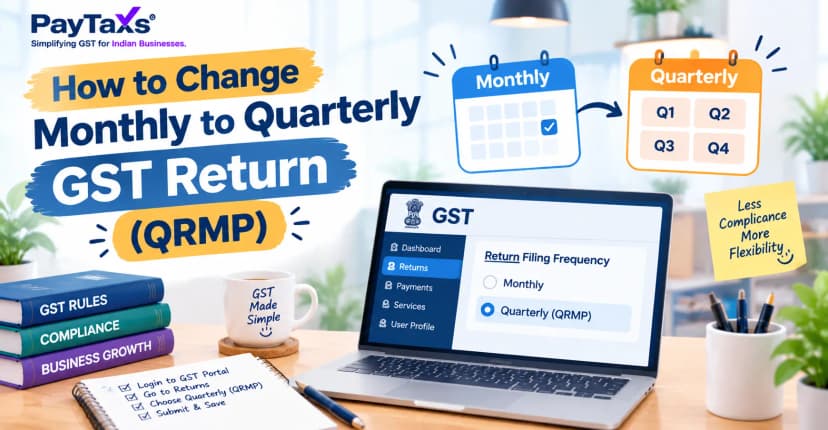
Eligible taxpayers who opt for the Quarterly Return Monthly Payment (QRMP) scheme can file GSTR-1 and GSTR-3B quarterly while making applicable tax payments monthly.
The usual quarterly deadlines are:
|
Return |
Standard quarterly deadline |
|
GSTR-1 |
13th of the month following the quarter |
|
GSTR-3B |
Generally the 22nd or 24th of the month following the quarter, depending on the state or union territory |
For example, returns for the October–December quarter would generally be due in January of the following year.
Under QRMP, quarterly returns do not mean that every tax payment can wait until quarter-end. Applicable monthly payment obligations still need attention.
Eligibility and payment requirements depend on the scheme rules. Check the official QRMP scheme guidance before choosing or changing your filing frequency.
To avoid confusion, identify your taxpayer category, return type, and filing frequency before checking a deadline.
Use this quick checklist:
A simple compliance calendar makes the GST return filing deadline easier to track, especially if your business manages several GST registrations.
Missing a deadline does not mean you should ignore the return. The appropriate next step is to check the outstanding filing, calculate any applicable amount due, and complete the required compliance steps as soon as possible. Depending on the return and circumstances, late filing may result in late fees, interest, or other consequences under the applicable rules.
If you discover a missed deadline:
The exact consequences depend on the return type, tax liability, and applicable provisions. If your case involves a notice, an ITC discrepancy or a complicated liability calculation, seek qualified GST assistance.
You may also find our [guide to responding to a GST notice useful if you have received a notice and need to understand the next steps.
Rather than relying only on a calendar image or an old article, verify the deadline for your particular tax period.
Follow these steps:
You should also confirm that you are following the correct filing frequency. A date applicable to monthly filers may not apply to a taxpayer using QRMP. For additional guidance, consult the official GST Portal return manuals.
GST compliance becomes easier to manage when you know which returns apply to your business, maintain organised records and track deadlines before they arrive. The GST return filing due date is not just a calendar reminder. It is an important part of your compliance routine that helps you plan reconciliations, review liabilities and submit returns on time. If you need support managing GST filing and compliance, explore our GST services at Paytaxs to learn more about the assistance available for your business.
Disclaimer: This article is for general educational purposes and is not a substitute for professional tax advice. Standard deadlines may vary by taxpayer category, filing frequency, state or union territory, and government notifications. Verify the applicable due date using official GST resources before filing.
Note: This guide is for information purposes only. The views expressed in this guide are personal and do not constitute the views of Paytaxs. Paytaxs or the author will not be responsible for any direct or indirect loss incurred by the reader for taking any decision based on the information or the contents. It is advisable to consult either a CA, CS, CPA or a professional tax expert from the Paytaxs team, as they are familiar with the current regulations and help you make accurate decisions and maintain accuracy throughout the whole process.
Hatim Dudhiyawala is a Certified Public Accountant (CPA) with SaveTaxs and specializes in Indian and NRI taxation. He advises individuals, NRIs, and businesses on income tax filing, capital gains taxation, DTAA benefits, fund repatriation, and tax compliance. With experience in cross-border tax matters, Hatim helps taxpayers understand complex regulations and make informed decisions. Through his articles, he shares practical insights to help readers stay compliant and manage their tax obligations with confidence. See Full Bio
Want to read more? Explore Blogs